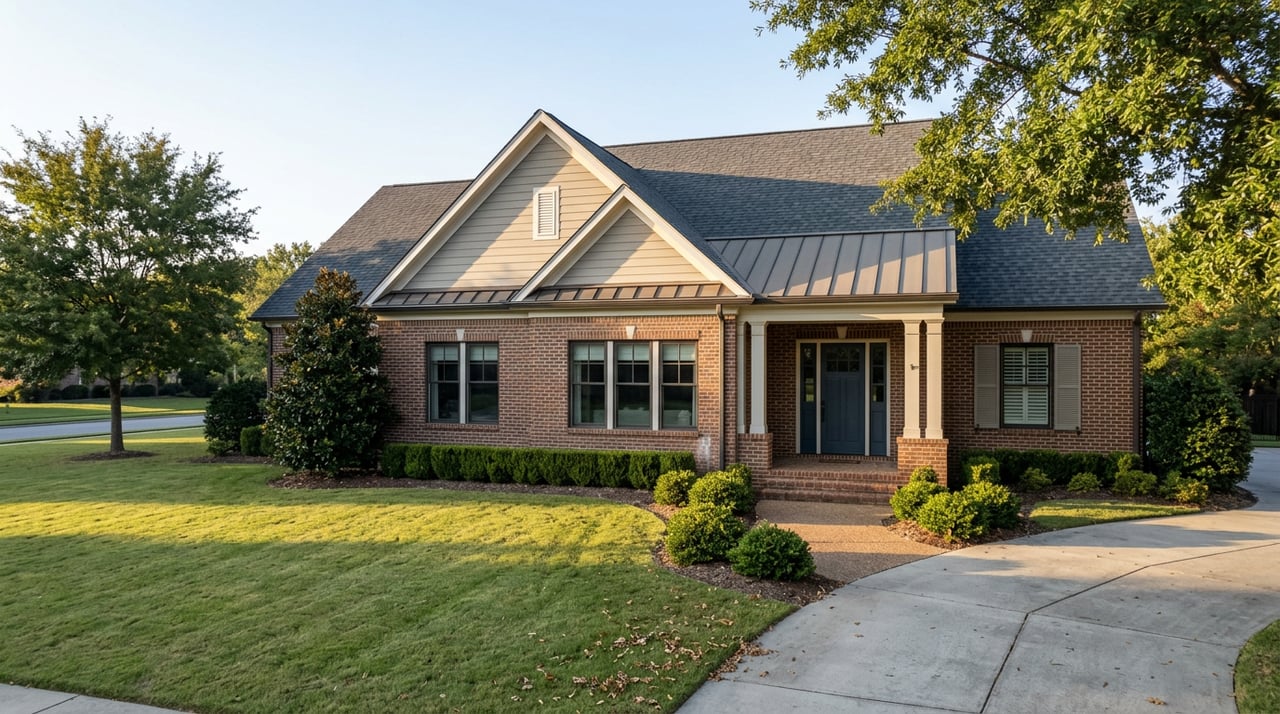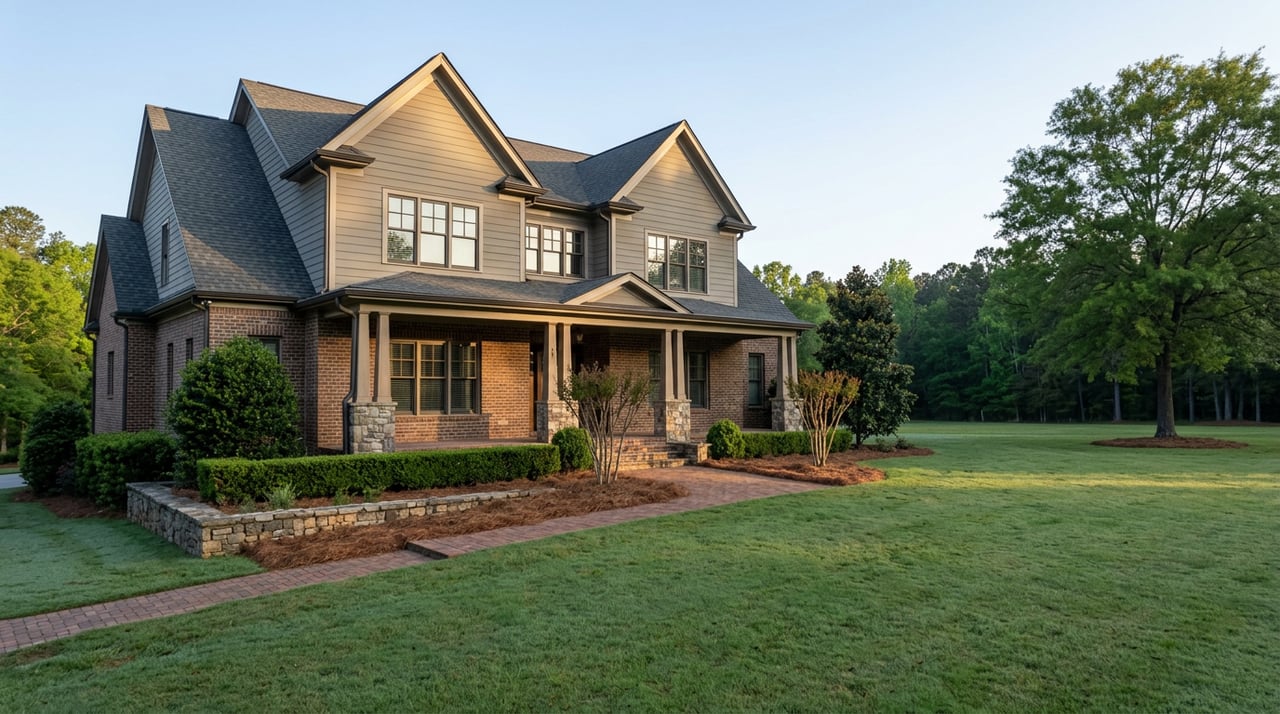
A couple finds a house on three wooded acres off Pleasant Ridge Road. The kitchen needs work, the deck needs replacing, and they want to convert the bonus room over the garage into a fourth bedroom for a parent moving in. Their contractor calls Guilford County Environmental Health to schedule a soil evaluation for the septic system upgrade. The county's answer: come back once the Town of Summerfield has signed off.
That's the part almost nobody explains before closing. In Summerfield, the county can't even look at your septic or well application until the town issues something called a Development Clearance Certificate. Miss that step, and a straightforward addition can sit in limbo for weeks while paperwork bounces between two different government offices that don't talk to each other until you make them.
The Permit That Comes Before the Permit
Most homebuyers assume septic and well work runs through the county alone, since Guilford County Environmental Health is the agency that actually evaluates soil, issues improvement permits, and inspects the tank and drain field. That's true almost everywhere in the county. It's not true in Summerfield.
Guilford County's own permit guidance is explicit: a Development Clearance Certificate must be obtained from the towns of Jamestown, Oak Ridge, Sedalia, Summerfield, and Whitsett, along with the Piedmont Triad Airport Authority, before the county will accept an application for any permit, including a septic improvement permit or soil evaluation. Summerfield's own permits page states the same thing from the town's side, and the requirement is written into the town's Unified Development Ordinance, revised as recently as April 2026.
The sequence in practice looks like this:
| Step | Who Handles It | What You Need Before Moving On |
|---|---|---|
| 1. Town Development Clearance Certificate | Town of Summerfield Planning Department | Approved plot plan showing placement of the home or addition |
| 2. Septic improvement permit or soil evaluation | Guilford County Environmental Health | Copy of the approved DCC on file |
| 3. Well permit and water testing (if applicable) | Guilford County Environmental Health | Copy of the approved DCC on file |
| 4. Building permit | Guilford County Inspections | Copy of the approved DCC, plus septic/well approvals |
Guilford County's own permit logs show this playing out project by project. Building permit records for Summerfield additions and new builds routinely carry a note that the "Summerfield clearance certificate is on file" before the septic check and plan review can move forward. It's not a formality tacked onto the paperwork. It's the gate everything else waits behind.
Why the County Won't Just Take Your Call
This isn't bureaucratic stubbornness. Summerfield operates as what its own government describes as a limited services town, meaning it handles planning, zoning, and code compliance locally while contracting out most other functions, including building inspections, to Guilford County. The DCC is the town's way of confirming that a proposed home, addition, or accessory structure actually complies with local zoning, setbacks, and lot coverage rules before the county spends time evaluating soil or issuing a building permit for something the town might reject on zoning grounds alone.
For a buyer, the practical effect is that the septic contractor you hire can't shortcut the process. If the DCC isn't already on file for a property, plan on that step happening first, and plan on it taking real calendar time on top of whatever the county's own septic and well queue requires.
The Soil Is the Zoning Map
Here's the part that explains why Summerfield lots run large. The town's zoning code sets minimum lot sizes by district: 3.00 acres in Agricultural, roughly 1.38 acres in Rural Residential, roughly 0.92 acres in Residential Single-Family, and roughly 0.69 acres in RS-30. Those numbers look like classic large-lot suburban zoning until you look at why they exist.
A 2026 rezoning application for roughly 106 acres on Millbrook Road and Sarah Marie Drive spells out the first half of that dependency in the county's own staff report: well and septic capabilities will be reviewed by County Environmental Health during the subdivision application process before any lots get approved. An earlier rezoning case near the Birkhaven subdivision put the second half in writing. Town planning staff noted there that soil conditions for well water and septic system requirements regulate the maximum number of buildable lots on a parcel, regardless of what the underlying zoning district would otherwise allow. The zoning line on the map sets a ceiling. The soil underneath sets the real one, and in a lot of Summerfield the soil ceiling is lower.
This is also where North Carolina's 2023 overhaul of septic permitting matters for anyone dealing with tricky soil. Session Law 2023-90 created what the state calls an engineered option permit, letting a licensed professional engineer design and certify a wastewater system directly rather than waiting in the standard county evaluation queue. It can speed up a project on marginal soil. It does not, however, get you past Summerfield's Development Clearance Certificate. The town gate still comes first.
The Proof Is the Development That Left
If you want to see how binding that septic ceiling really is, look at what happened when a developer wanted to build past it.
For most of the last decade, High Point developer David Couch pushed Summerfield's Town Council to allow denser housing, including the town's first apartments, on close to 1,000 acres he owned around Summerfield Farms. Council members and many residents resisted, citing traffic, school capacity, and the rural character higher density would change. Part of the underlying problem was structural. Couch wanted to extend water and sewer lines from the City of Greensboro specifically so he could avoid building septic fields across the property, since septic-dependent development in Summerfield tops out at roughly one house per acre.
He eventually got his wish, just not from Summerfield. In 2024, state lawmakers de-annexed nearly 1,000 acres of Couch's land, moving it out of Summerfield's jurisdiction and into unincorporated Guilford County. The first phase, a roughly 79-acre parcel named Christopher Village, was then annexed into the City of Greensboro so it could tie into city water and sewer instead of septic. Greensboro's city council approved that annexation in 2025, and the plan calls for about 268 housing units at a density near 3.4 dwelling units per acre, several times denser than the one-house-per-acre pattern typical of septic-dependent Summerfield. At the time of approval, construction was projected to begin sometime in 2026.
That's the clearest evidence available that the septic and well system, not the zoning ordinance by itself, is what actually caps what gets built inside Summerfield's town limits. The one project that wanted meaningfully higher density had to leave the town to get it.
What This Means If You're Buying an Estate Lot
None of this should scare a buyer away from Summerfield's larger lots. It should change what you check, and when.
- Ask whether a Development Clearance Certificate is already on file for the property, especially if you're planning an addition, a garage conversion, or anything that adds a bedroom.
- Request the county's septic improvement permit and construction authorization, along with any operation and maintenance inspection records if the system includes a pump or engineered component.
- Confirm the septic permit's bedroom count matches the current listing. North Carolina brokers are required to verify this match and include a copy of the septic permit in the MLS listing. A converted office or bonus room counted as a bedroom without an updated permit is a mismatch a lender or inspector will flag before closing, not after.
- Verify the inspection was done by an NCOWCICB-certified inspector. State law reserves point-of-sale septic evaluations for certified specialists, not general home inspectors, plumbers, or septic pumpers.
- Pull well records separately, including yield documentation and recent bacteriological and nitrate lab results through Guilford County, particularly on properties with older wells or unusual soil.
Budget time for the sequence, not just the cost. A DCC review, a county soil evaluation, and a septic or well permit rarely happen on the same week, and none of it moves until the first piece is filed.
FAQ
Does North Carolina law require a septic inspection before every home sale? No. State law doesn't mandate one, but most mortgage lenders, especially for FHA and VA loans, require it in practice, and NC Real Estate Commission rules require brokers to confirm the bedroom count matches the septic permit on file.
Can any home inspector perform the septic evaluation? No. Only inspectors certified by the North Carolina On-Site Wastewater Contractors and Inspectors Certification Board can perform the official point-of-sale septic inspection. A general home inspector can note visible concerns during a walkthrough, but the certified evaluation is a separate step.
Does the Development Clearance Certificate apply to small projects, like a deck or a shed? It depends on the scope of work and whether it triggers a building permit. Any project requiring a county building permit, including some accessory structures, will need the DCC on file first. Checking with the town's planning department before starting design work is the fastest way to confirm.
Buying or building on a Summerfield estate lot rewards patience with the process as much as patience with the search. If you're weighing a property like this, Kathy Haines Homes can walk through the permit history, the septic and well documentation, and what it actually takes to close cleanly. Schedule a consultation before you write the offer, not after.