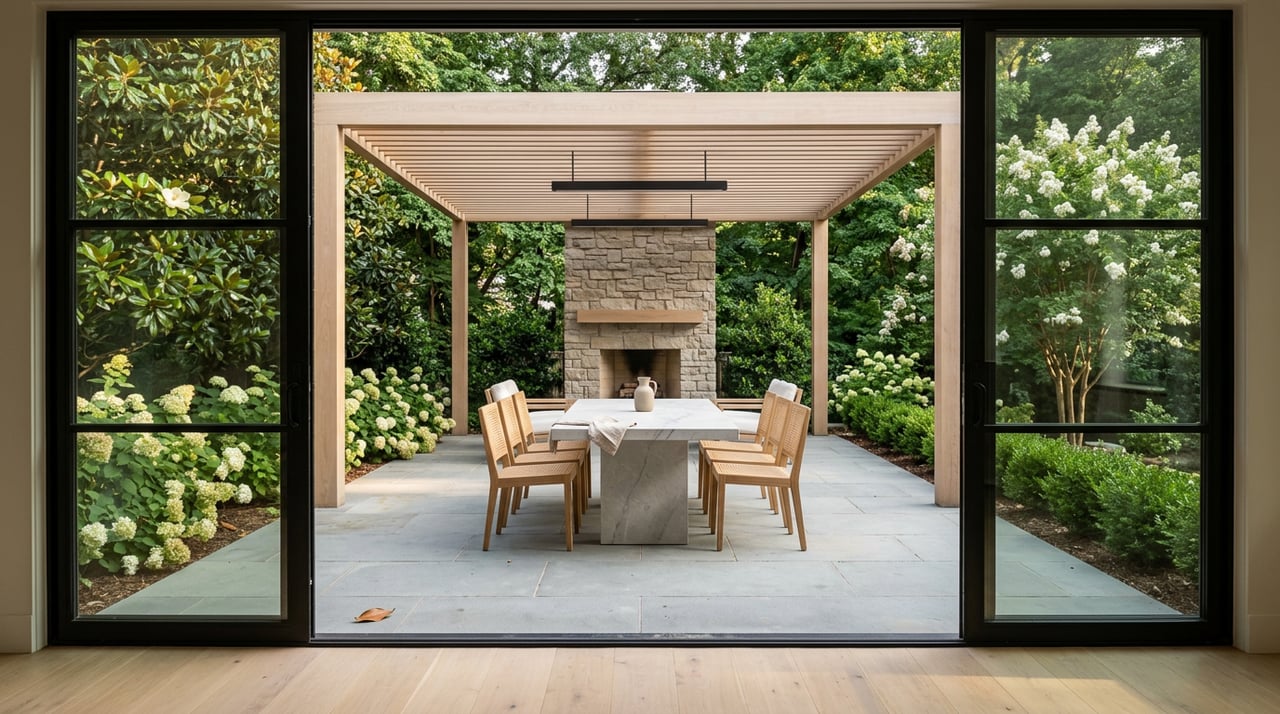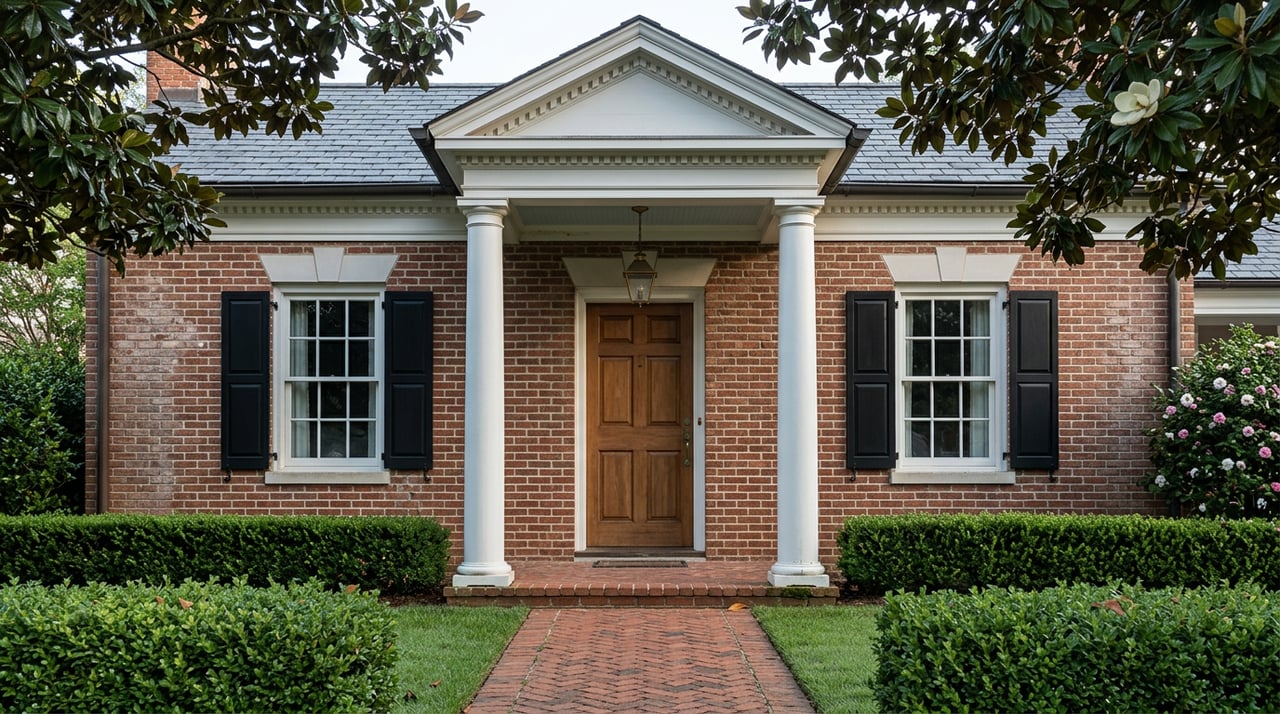
In July 2026, the median sale price in Fisher Park fell more than 30 percent compared to the same month a year earlier. A mile north, in Old Irving Park, the trailing twelve-month median rose 16 percent over a comparable stretch. Same city. Same interest rate environment. Same word, historic, stamped across both neighborhoods' listing descriptions.
The instinct is to explain that gap with the usual suspects: inventory, interest rates, buyer demand. Those matter, but they are not the reason a house a few blocks from Fisher Park's 12-acre namesake park can trade for $335,000 while another property within the same historic district closes at $5.25 million. The real answer is a regulatory line that most portals never mention, because most portals do not distinguish between two very different things that both get called "historic."
The regulation hiding inside one word
Greensboro has three neighborhoods with a legal designation called a local historic district: College Hill, Dunleath, and Fisher Park. In each of these, a Certificate of Appropriateness must be approved by the city before an owner changes anything visible from the street, from a new roofline to a satellite dish.
Old Irving Park carries no such designation. It appears on the National Register of Historic Places, which is a recognition program, not a regulatory one. Listing on the National Register documents architectural and historical significance. It does not require a homeowner to ask anyone's permission before replacing a window, adding a wing, or tearing down a garage.
That distinction, not square footage or age, is the mechanism behind the price behavior in both neighborhoods. One district operates under a rulebook that governs what a house is allowed to become. The other does not.
What a Certificate of Appropriateness actually requires in Fisher Park
The Greensboro Historic Preservation Commission reviews every exterior change proposed inside Fisher Park's boundary. The process has two speeds:
- Routine work, a repaired porch, a new fence, a replaced deck, a removed dead tree, gets approved by city planning staff without a hearing.
- Anything larger, new construction, additions, a garage, or a solar array, goes in front of the nine-member commission, which meets the last Wednesday of each month at 4 p.m. in the Melvin Municipal Office Building.
There is currently no application fee, but there is a calendar. A 2021 case from the commission's own minutes illustrates the scale at which this applies: an owner on Fisher Park Circle needed formal approval just to build a roof over an existing rear patio and add a railing, a project most homeowners elsewhere would finish without calling the city at all.
A few blocks north, Old Irving Park listings include a custom five-bedroom home built new by Wolfe Homes, with a chef's kitchen and twelve-foot ceilings, sitting a short walk from the Greensboro Country Club. That kind of ground-up construction is not something Fisher Park's process is built to approve quickly, if at all, because the commission's job is to protect what already exists.
Four snapshots, no consistent trend
Pull Fisher Park's pricing data across the past year and it refuses to draw a line.
| Time window | Metric | Figure |
|---|---|---|
| June 2025 | Median list price | $385,000 |
| February 2026 | Median list price | $729,000 |
| July 2025 | Median sale price | $679,375 |
| July 2026 | Median sale price | $459,900 (down roughly 32% year over year) |
Fisher Park typically has somewhere between two and five active listings at any given time. With a sample that small, one estate sale or one modest bungalow closing swings the median by six figures in either direction. Even price per square foot, usually the more stable of the two metrics, moved from roughly $238 in July 2026 to over $307 the following month. That is not a market cooling or heating. That is a market too thin to produce a trend line at all.
This is worth sitting with if you are comparing these neighborhoods using a portal's headline number. The "median" in Fisher Park on any given week is closer to a description of which specific house happened to sell than a signal about where values are heading.
What Old Irving Park's freedom actually buys
Old Irving Park's price range tells a different story, and it is wide on purpose. Recent listings span roughly $200,000 for a ranch-style home or unrenovated bungalow up to $2 million for a century-old estate near the Country Club, whose two golf courses, tennis courts, and pool sit at the neighborhood's center. Johnson Park lies inside the neighborhood, Latham Park is nearby, and Golden Gate Shopping Center, anchored by a Food Lion, handles the everyday errands.
That spread is not confusion. It is what happens when a neighborhood without a Certificate of Appropriateness requirement lets buyers do more or less whatever their budget and architect can justify: full teardown-rebuilds, additions that would need a commission hearing a mile south, and renovation timelines that do not depend on a monthly meeting schedule. The neighborhood's own history explains why this gap exists. Fisher Park was Greensboro's first suburb, platted in 1901 when Captain Basil J. Fisher donated the low-lying land that became the neighborhood's namesake park, and it stayed the city's most fashionable address until Irving Park, a mile north, eclipsed it. When office development began threatening Fisher Park's historic housing stock in the 1950s and 1960s, the city responded by designating it Greensboro's second local historic district in 1982. Old Irving Park never faced that same redevelopment pressure, so it never received the same regulatory shield, and it never picked up the same restrictions.
The rulebook just got rewritten
Here is the part that matters if you are weighing a purchase in Fisher Park right now rather than five years ago. In the fall of 2025, Greensboro finalized the first comprehensive rewrite of its Historic District Design Standards since 2003, the manual the commission uses to decide every Certificate of Appropriateness application in College Hill, Dunleath, and Fisher Park. City planning staff worked with preservation consultant Gate City Preservation on the update, which the Rhino Times reported was intended to make the guidelines clearer for homeowners without a preservation consultant on retainer, and to account for modern concerns like energy efficiency that the 2003 version never addressed. One practical change: newer "contributing" structures, think midcentury additions inside an otherwise Victorian-era block, now have somewhat more latitude than a strict, decades-old reading of the rules allowed.
If you are budgeting a renovation on a Fisher Park property, this is the first year that budget should reflect an updated, friendlier process rather than the pre-2025 rulebook. It will not turn Fisher Park into Old Irving Park. It does mean the friction just got smaller for the first time in over two decades.
FAQ
Does a home in Old Irving Park require historic-district approval before I renovate? No. Old Irving Park is listed on the National Register of Historic Places, which recognizes its architectural significance but does not, by itself, restrict what an owner does to the exterior of a private home. Fisher Park, College Hill, and Dunleath are Greensboro's only locally zoned historic districts subject to Certificate of Appropriateness review.
Is there a fee for a Certificate of Appropriateness in Fisher Park? Currently, no. The city does not charge an application fee, though projects that require a full Historic Preservation Commission hearing add time to a renovation timeline that staff-approved minor work does not.
Are there tax credits available for a historic rehabilitation in Greensboro? North Carolina has run a state historic rehabilitation tax credit program since 2016, administered through the state's Historic Preservation Office, that can offset a portion of qualifying renovation costs on eligible historic properties. Anyone considering a substantial rehab in Fisher Park, College Hill, or Dunleath should raise this with an accountant before finalizing a renovation budget, since eligibility and the math depend on the specific scope of work.
If you are comparing Fisher Park and Old Irving Park and trying to figure out which set of rules fits the project you actually have in mind, that is exactly the kind of question worth working through before you write an offer. Kathy Haines has spent years inside Greensboro's historic districts and can walk you through what a specific property's Certificate of Appropriateness history looks like, what the new design standards mean for your renovation plans, and what the real price range is for the block you are considering, not just the median headline. Schedule a consultation and bring your address.